
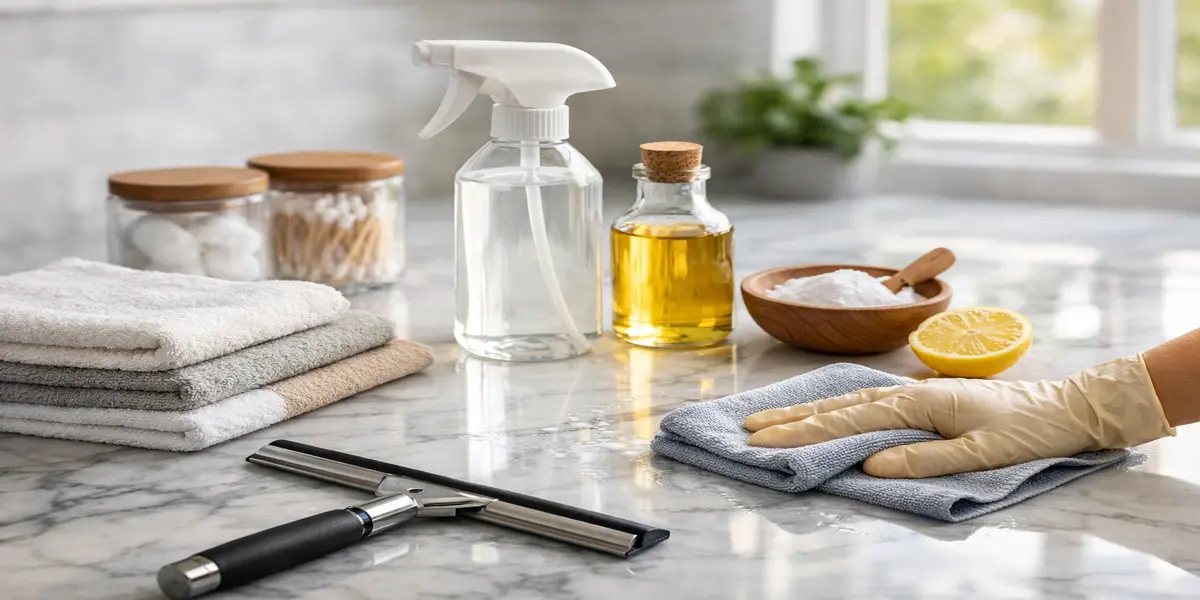
Clean marble: How to Maintain Shine & Avoid Damage
Have you ever tried to admire the gleaming of the beautiful marble and wonder how to maintain its appearance that beautiful without messing it up? Marble is one of the most expensive and most classical materials that are used in homes. It is applied to countertops and vanities in the kitchen or bathrooms, or flooring, and it instantly provides the room with elegance and beauty. However, it is poorly fragile albeit strong. Most house owners destroy it unknowingly by applying some mean chemicals, acid cleaners, or rough scrubbing arms. For keeping marble safe and polished, professional bond cleaning can also be considered.
The positive side is that marble can remain beautiful over years in case it is clean in the proper way. With some mild techniques and appreciation of the reaction of marble to various cleaning agents, you will be able to keep it natural and shiny without putting it at risk.
1. Why Marble Demands Special Treatment?
Marble is a natural substance that is composed predominantly therefore is porous and responds to acidic compounds, as per cleaning professionals. It means that surface can be etched by such simple objects as vinegar, lemon juice or even highly chemical cleaners. Etching is in form of dull or cloudy marks that remove the natural shine of the marble. The marble can also easily be stained by liquids and therefore in case of spillages, the spillage may be in the form of a stain when it is not cleaned straight away. The sensitive nature of the marble will make the owners adopt safer cleaning methods that will not degrade the marble rather will be used to conserve it.
2. Start with Regular Dusting
Cleaning of marble surfaces through dusting is also a great first step to the care of marble surface. Dust, sand and minute grains of rubbish rubbed against marble may scratch it. The scratches may cause destruction of the polished finish with time. One can clean the loose dirt using a soft microfiber cloth or dry dust mop in a manner that does not affect the stone negatively. The cleaning of the marble surfaces would be done regularly and in a mild manner to ensure that the marble surfaces are clean and cannot be hoarded to undergo strenuous cleaning.
3. Cleaning Solution Use Light Cleaning Solution
In cleaning marble, the safest thing to use is mild cleaning solutions. The stone can be destroyed by strong chemicals and acidic cleaners permanently. Rather, all that one can do is to use hot water with a few drops of a pH-neutral dish soap to clean daily. Fingerprints and surface grime as well as light stains can be removed using a soft cloth or sponge wetted with this solution. This soft technique maintains the marble clean and does not break the natural polish and smoothness.
4. Wipe but Not a Wet Cloth
Excessive use of water in cleaning marble surfaces is also another error. Due to the porosity of marble, a lot of moisture can creep into the stone and discolour or stain it. A damp cloth should be preferred instead of wetting the surface. Wipe it off using a clean damp cloth after wiping off using mild solution of the soap. This method ensures that the surface remains clean without getting into the unwarranted moisture.
5. Dry the Surface Immediately
Wiping off marble surfaces though the cleaning is a crucial practice that most individuals fail to follow. Marble may result in water spots or mineral deposits when water is left on it. A soft microfiber towel is used to dry the surface to avoid such marks in addition to the restoration of the natural shine of the stone. Marble surfaces may be polished by gently rubbing them with a dry cloth.
6. Clean Spills Immediately
Speed is highly valued in the event of a spillage on marble. Coffee, wine, juice, oil or even sauces are liquids that can penetrate the stone easily and leave some stains. In case of spillage, wipe the surface at once by a clean cloth rather than rubbing it. Rubbing can also cause the liquid to be distributed further on the surface. Blotting- it is advisable to wipe lightly with mild soap and water and dry it well. The faster the better since stains do not get stuck in the marble.
7. Avoid Harsh Scrubbing Tools
One may be inclined to wash the stubborn stains off but the tools used should be of non-abrasive nature as they may do more harm than good. Scrubbing pads, steel wool or stern brushes and the surface are easily scratched and causes the surface to be ruined. Alternatively, it is always best to clean marble using soft cloths, microfiber towels or soft sponges. It is much safer and more efficient to wait and clean repeatedly, than to clean harshly.
8. Tough Stains Carefully Use Baking Soda
Marble surfaces may sometimes have deep stains which may need extra care. In those instances, a weak formula of baking soda could help eliminate the color. A baking soda and a little water paste would be made and applied to the stained part in a light layer. It can help to wipe the paste using a towel and leave it several hours to dry before cleaning the stain. This should however be done periodically and with caution as continued doing so can wear out the finish of the marble eventually.
Conclusion
The use of marble is an ancient age design which adds the elegance and worth to any house. However, they are prone to become ugly in case they are not washed properly. By knowing the weaknesses of the material, and using gentle deep cleaning on the marble, homeowners can end up saving on the scratches, stains and dullness of the marble. Polished and beautiful marble surfaces can always remain shiny and polished with some occasional maintenance, the correct cleaning agent and a little bit of examination. You can also check our cleaning routine for festivals for more detailed guidance.